
In a stunning turn of events that has ignited furious debate across social media, sports forums, and mainstream news outlets, Whoopi Goldberg unleashed a scathing attack on Eliud Kipchoge during a heated segment linked to recent controversies in athletics and celebrity commentary.
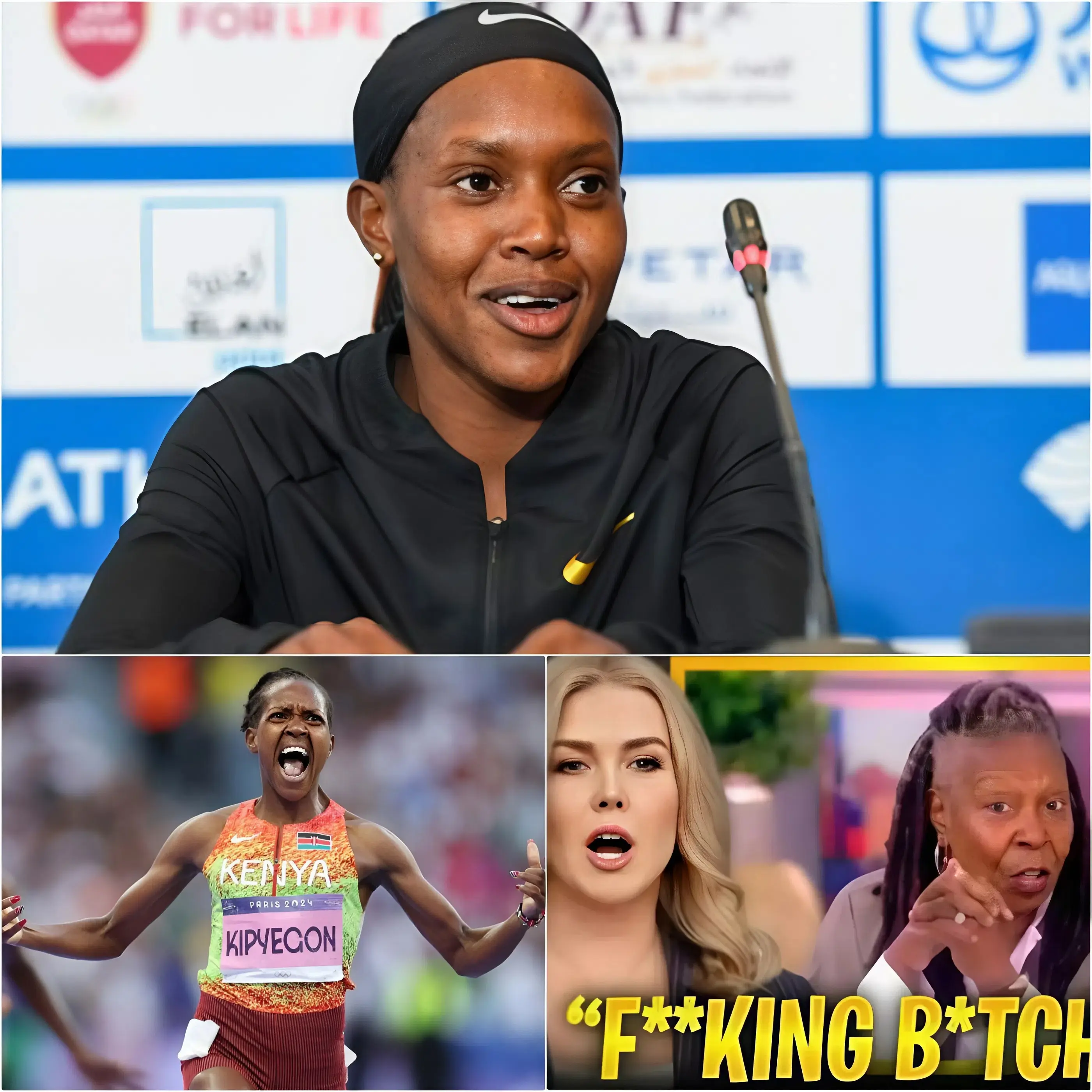
The iconic actress and co-host of The View reportedly declared, “Who do you think you are? You’re nothing but a damn Kenyan! Other than running, you have no value at all; in the modern world of athletics, you’re not worth a penny!” The remarks, allegedly following earlier sharp exchanges involving political figure Karoline Leavitt, exploded online, drawing accusations of racism, disrespect toward one of sport’s greatest icons, and fueling a massive media storm.
Kipchoge, the 41-year-old Kenyan marathon legend—holder of the unofficial sub-two-hour marathon (1:59:40 in 2019), two-time Olympic champion (Rio 2016, Tokyo 2020), and multiple world major winner—has long been celebrated for his humility, discipline, and philosophy of running as a force for good. His global respect stems not just from records but from his mentorship, charity work through the Kipchoge Foundation, and his role as an ambassador for perseverance and human potential.
The backlash was immediate and intense. Fans, athletes, and commentators flooded platforms with support for Kipchoge, calling the comments outdated, ignorant, and beneath the dignity of public discourse. Hashtags like #RespectKipchoge and #StandWithEliud trended worldwide, with many pointing out the irony: a figure known for promoting inclusivity seemingly dismissing an athlete whose achievements transcend borders and cultures.
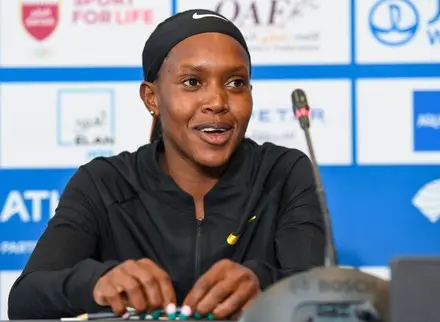
But the real moment that silenced the noise came just minutes later. Faith Kipyegon, the undisputed queen of middle-distance running, two-time Olympic 1500m gold medalist (Tokyo 2020, Paris 2024), world-record holder (3:49.04), and a beacon of grace under pressure, stepped forward. Known for her calm demeanor, humble smile, and quiet strength—especially as a mother balancing elite competition—she took the microphone during the unfolding chaos, looked directly into the cameras, and delivered a razor-sharp, 12-word response that cut through the tension like a knife.
“Respect is earned on the track, not given by words from a screen.”
Those 12 cold, precise words hung in the air. The room fell silent. No shouting, no theatrics—just pure, unflinching truth from one of Kenya’s most accomplished active athletes. Kipyegon’s statement wasn’t just a defense of Kipchoge; it was a broader reminder of where true value in sports lies: in performance, character, and legacy, not in soundbites or celebrity status.
Kipyegon’s intervention resonated deeply because she embodies the same Kenyan running ethos that Kipchoge represents—relentless work ethic, humility, and excellence forged through adversity. As a fellow icon who has faced her own battles (including navigating controversies in women’s athletics and pushing boundaries as a trailblazing mother-athlete), her words carried unmatched authority. Social media erupted again, this time in praise: “Faith just ended the debate with class,” one viral post read. Another: “12 words > endless noise. Queen speaks!”
The incident highlights deeper tensions in how global celebrities engage with African athletes. Kipchoge’s dominance has elevated Kenyan running to unprecedented heights, inspiring generations and putting the nation on the map far beyond athletics. Dismissing him as “just a runner” ignores his cultural impact, business acumen (through endorsements and his training camp), and role as a global motivator. Critics argue the comments reflect a lingering bias that undervalues non-Western achievements unless they fit certain narratives.
Meanwhile, Kipyegon’s poised clapback has been hailed as a masterclass in dignity. At a time when athletics faces doping scandals, gender debates, and commercialization pressures, her response reaffirmed core values: respect the craft, honor the grind, and let results speak louder than rhetoric.
This saga isn’t over. Discussions continue on podcasts, talk shows, and in athletic circles about accountability in media, the power of athletes to shape narratives, and why figures like Kipchoge and Kipyegon deserve unassailable reverence. Kipchoge himself has stayed characteristically silent so far, focusing on training and his ongoing “World Tour” of inspiration—proving once more that actions outweigh words.
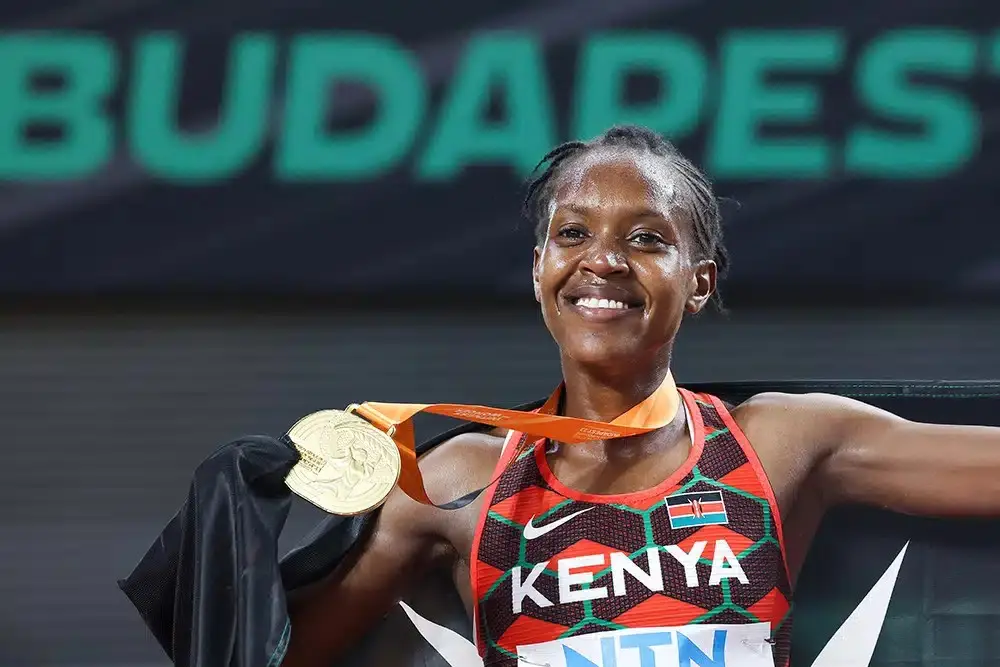
In the end, Faith Kipyegon’s 12-word mic drop didn’t just defend a legend; it reminded the world why Kenyan runners continue to dominate: because they run with purpose, respond with poise, and let their legacies do the talking. In an era of instant outrage, sometimes the most powerful statement is the calmest one.
As the dust settles, one thing is clear: underestimating icons like Eliud Kipchoge comes at a cost—and when the queen steps in, the conversation changes forever.