
Do you think America’s leadership should be restricted to those born on U.S. soil? Is this the solution to safeguard our values, or does it go too far?
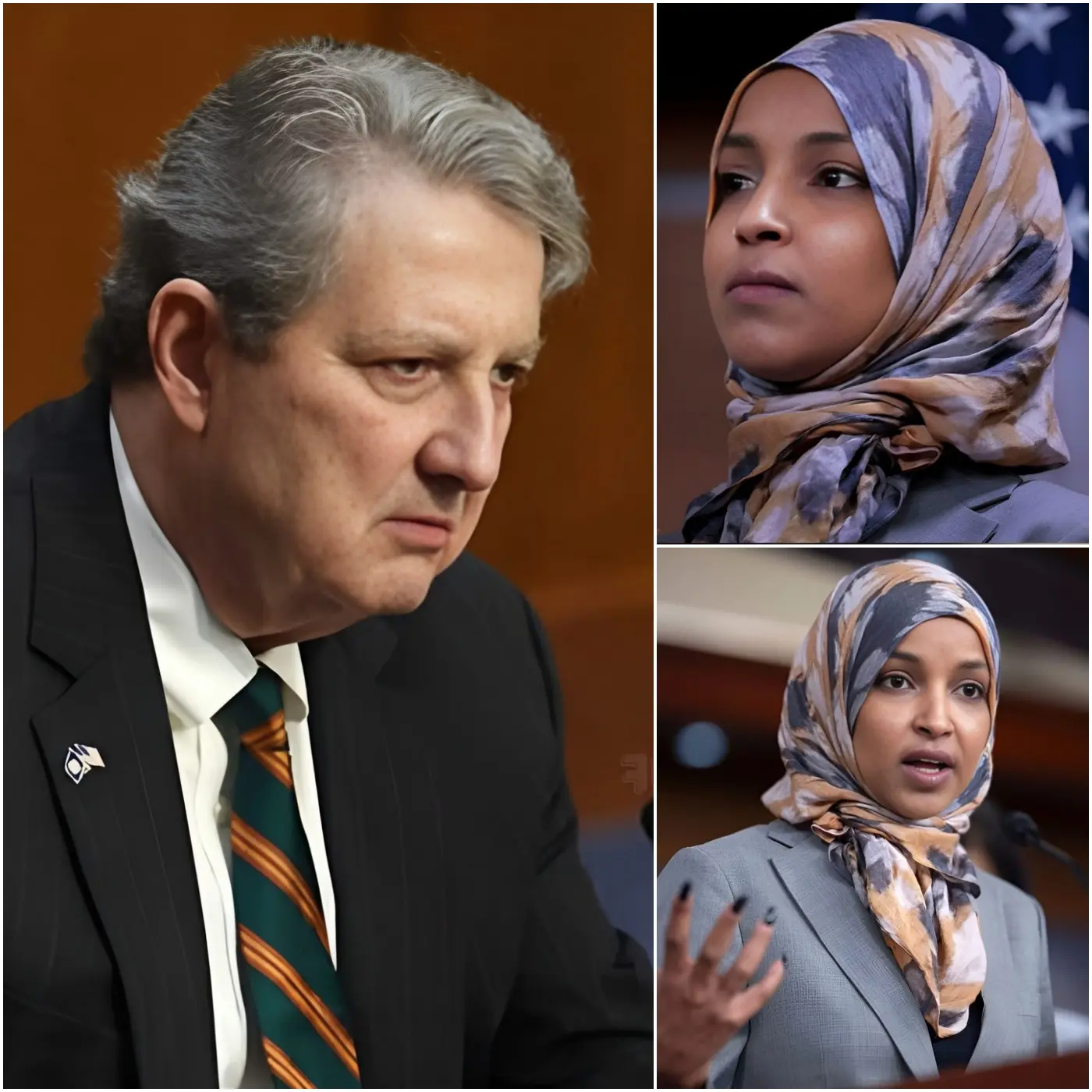
Senator John Neely Kennedy (R-Louisiana), known for his sharp wit and straightforward conservative stance, dropped a political bombshell on March 25, 2026, by introducing legislation that seeks to fundamentally alter the eligibility requirements for the highest offices in the United States. Dubbed the “Born in America Leadership Act,” the proposal aims to restrict the presidency, vice presidency, and all seats in Congress exclusively to individuals born on U.S. soil — effectively excluding naturalized citizens from holding these positions.
The bill comes at a time of heightened national debate over immigration, national identity, and the meaning of American citizenship. Kennedy argues that only those born and raised within the physical boundaries of the United States can truly possess the deep, instinctive loyalty and cultural understanding required to lead the nation. In a fiery Senate floor speech, he declared: “If you want to run this country, you ought to have been born on this soil. It’s that simple. America deserves leaders who bleed red, white, and blue from day one — not someone who chose us later in life.”
The proposal would require a constitutional amendment, as the current U.S. Constitution already mandates that the president be a “natural born Citizen,” but allows naturalized citizens to serve in Congress after meeting certain residency and citizenship duration requirements (seven years for the House, nine for the Senate). Kennedy’s bill seeks to close what he calls a “dangerous loophole” by extending the natural-born requirement across all federal elected offices.
Supporters of the bill, primarily from the Republican side and conservative grassroots movements, hail it as a necessary safeguard. They argue that in an era of increasing global tensions, dual citizenship concerns, and questions about loyalty, America must ensure its leaders have an “unshakable American bond.” Proponents point to historical figures like Alexander Hamilton (who was born in the Caribbean) and recent naturalized citizens in high positions, claiming that while they may be loyal, they cannot fully embody the lived experience of someone born and raised under the American flag.
Some go further, suggesting the bill would prevent potential conflicts of interest, foreign influence, or divided allegiances in critical decision-making roles involving national security and foreign policy.
Critics, including Democrats, constitutional scholars, and immigrant rights groups, have condemned the proposal as discriminatory, xenophobic, and fundamentally un-American. They argue that the United States was built by immigrants and their descendants, and that naturalized citizens have repeatedly proven their patriotism through military service, public service, and contributions to society. Prominent naturalized Americans such as former Secretary of State Madeleine Albright (born in Czechoslovakia), former Governor Arnold Schwarzenegger (born in Austria), and many current members of Congress would have been barred from their positions under this bill.
Legal experts warn that passing such a measure would require a constitutional amendment — a high bar needing two-thirds approval in both houses of Congress and ratification by three-fourths of the states — making its chances of success slim but its symbolic impact significant.
The bill has ignited intense debate across the political spectrum. Conservative media outlets like Fox News and Newsmax have praised Kennedy for “putting America First” and protecting the nation’s sovereignty. Liberal commentators and organizations such as the ACLU have called it “a dangerous step toward exclusionary nationalism” that undermines the 14th Amendment’s principles of equality and the American Dream. Public opinion polls conducted in the days following the announcement show a deeply divided nation: approximately 52% of Republicans support the idea, while 78% of Democrats oppose it, with independents split nearly evenly.
Kennedy, a former Treasury official and state treasurer before entering the Senate, has built a reputation for blunt, memorable one-liners. During the bill’s introduction, he quipped: “You wouldn’t hire a Frenchman to coach the New Orleans Saints just because he loves gumbo. Why would we let someone who wasn’t born here lead the greatest nation on Earth?” His remarks drew both laughter and sharp criticism on the Senate floor.

This is not Kennedy’s first foray into controversial immigration-related proposals. He has long advocated for stricter border security and reforms to birthright citizenship (the principle that anyone born on U.S. soil is automatically a citizen). The new bill builds on that philosophy, framing it as a matter of national security and cultural preservation rather than outright xenophobia.
Opponents argue the proposal ignores America’s history as a nation of immigrants. They point out that many of the Founding Fathers themselves were either immigrants or children of recent immigrants. Figures like Henry Kissinger, who served as National Security Advisor and Secretary of State despite being born in Germany, are frequently cited as examples of naturalized citizens who served with distinction. Critics also warn that the bill could discourage talented immigrants from pursuing public service and damage America’s global image as a land of opportunity.
As the bill moves through the legislative process, it faces significant hurdles. Constitutional scholars note that altering eligibility for Congress would require amending Article I of the Constitution, while changes to presidential eligibility would affect Article II. Even if passed by Congress, ratification by 38 states would be an uphill battle in today’s polarized political climate.
Beyond the legal and constitutional questions, the proposal has sparked a broader philosophical debate: What does it truly mean to be “American”? Is loyalty best guaranteed by birthplace, or by one’s actions, values, and commitment to the Constitution? Can someone who chooses America later in life love it as deeply — or even more deeply — than someone born here by chance?
For now, Senator John Kennedy has succeeded in forcing the conversation into the national spotlight. Whether his “Born in America” leadership proposal gains traction or fades as symbolic political theater remains to be seen. What is certain is that it has reignited passionate arguments about identity, belonging, and the soul of the American experiment.
As the nation grapples with these questions, one thing is clear: in an increasingly globalized world, defining who gets to lead America has never been more contentious — or more consequential.